Home » Guides
Gluten-Free Desserts
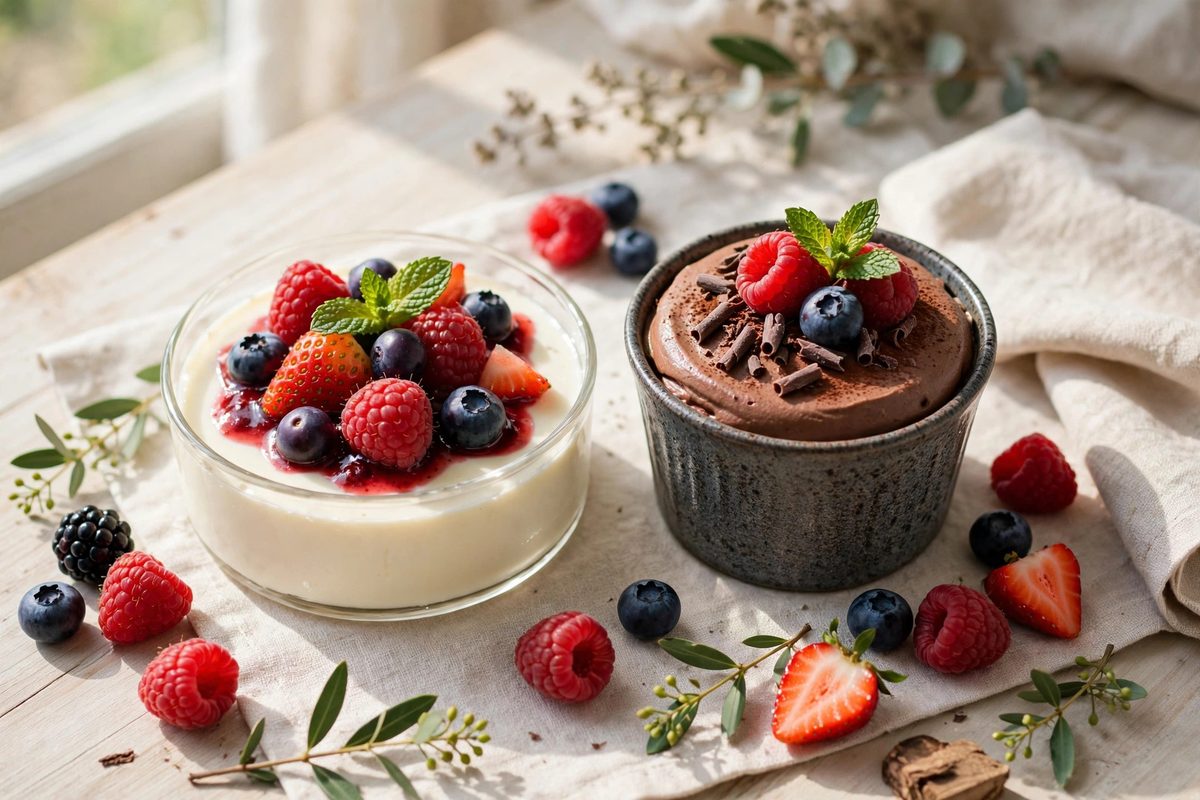
Dessert is often the course where gluten-free eating feels hardest, because so many puddings are based on pastry, sponge, or biscuits. But there are many naturally gluten-free desserts, and most wheat desserts adapt well with a 1-to-1 flour blend. A flourless chocolate cake, a fruit crumble with an oat topping, or a pavlova with cream and berries are all naturally gluten-free and impressive enough for guests. This guide covers the best gluten-free desserts, how to adapt recipes, and tips for serving dessert to a mixed group.
Naturally gluten-free desserts
Some of the best desserts never needed wheat. A flourless chocolate cake uses eggs, chocolate, and butter, and it is rich and dense. A pavlova uses egg whites and sugar, topped with cream and fruit. A fruit crumble with a topping of oats, butter, and sugar is naturally gluten-free if you use certified oats. Panna cotta, chocolate mousse, and rice pudding are all naturally gluten-free. Fresh fruit with yoghurt or ice cream is a simple, healthy dessert. Starting with a naturally gluten-free dessert is the easiest way to get a good result.
Adapting wheat desserts
Most sponge cakes, traybakes, and crumbles adapt well with a 1-to-1 gluten-free flour blend. Replace wheat flour weight for weight, add an extra egg for structure, and let the batter rest for ten minutes before baking. For pastry, use a gluten-free pastry recipe or a ready-made gluten-free pastry, which is now widely available. For biscuits and cookies, use a blend with xanthan gum and chill the dough before baking. Bake at a slightly lower temperature for a little longer, and cool the dessert fully before serving, because gluten-free bakes are fragile when hot.
Five easy dessert recipes
A flourless chocolate cake blends melted dark chocolate, butter, eggs, and sugar, and bakes in 25 minutes. An apple and berry crumble tops fruit with a mix of certified oats, butter, and sugar, and bakes until golden. A pavlova whisks egg whites and sugar into stiff peaks, bakes slowly, and is topped with cream and berries. A chocolate mousse whisks melted chocolate into whipped cream and egg whites, and sets in the fridge. A rice pudding cooks rice slowly in milk with sugar and vanilla, and it is comforting and cheap.
Serving dessert to a mixed group
If you are serving dessert to people who eat gluten and people who do not, choose a dessert everyone can eat, so no one feels different. A flourless chocolate cake or a pavlova works for everyone, and no one will notice it is gluten-free. If you make a wheat dessert as well, keep the gluten-free dessert separate and serve it first, so it does not pick up crumbs. Use clean utensils and a clean serving dish. Label the dessert clearly if it is part of a buffet, so people with celiac disease know it is safe.
Dessert for guests
Serving a gluten-free dessert to guests is a chance to show how good gluten-free food can be. Choose a dessert that is naturally gluten-free, such as a flourless chocolate cake or a pavlova, so no one notices the difference. Make it the day before, so you are not rushed, and decorate it simply with fruit and cream. Serve it with confidence, and tell people it is gluten-free only after they have tasted it. Most guests will be surprised and impressed, and it is a good way to show that a gluten-free diet does not mean missing out on the best part of the meal.
Frequently Asked Questions
What is the easiest gluten-free dessert?
A fruit crumble with a certified oat topping, or a pavlova with cream and berries. Both are simple and naturally gluten-free.
Can I adapt any dessert recipe to be gluten-free?
Most cakes, crumbles, and traybakes adapt well with a 1-to-1 flour blend. Pastry is harder, so use a ready-made gluten-free pastry.
Is ice cream gluten-free?
Most plain ice cream is gluten-free, but check the label, because some flavours contain biscuit, cake, or cookie pieces.
Important: if you have celiac disease or a wheat allergy, always check labels and look for certified gluten-free products. This site is general information only — talk to your doctor or a registered dietitian before changing your diet.